

Robotic Joint Replacement
Ethical, Compassionate and comprehensive Orthopaedic care
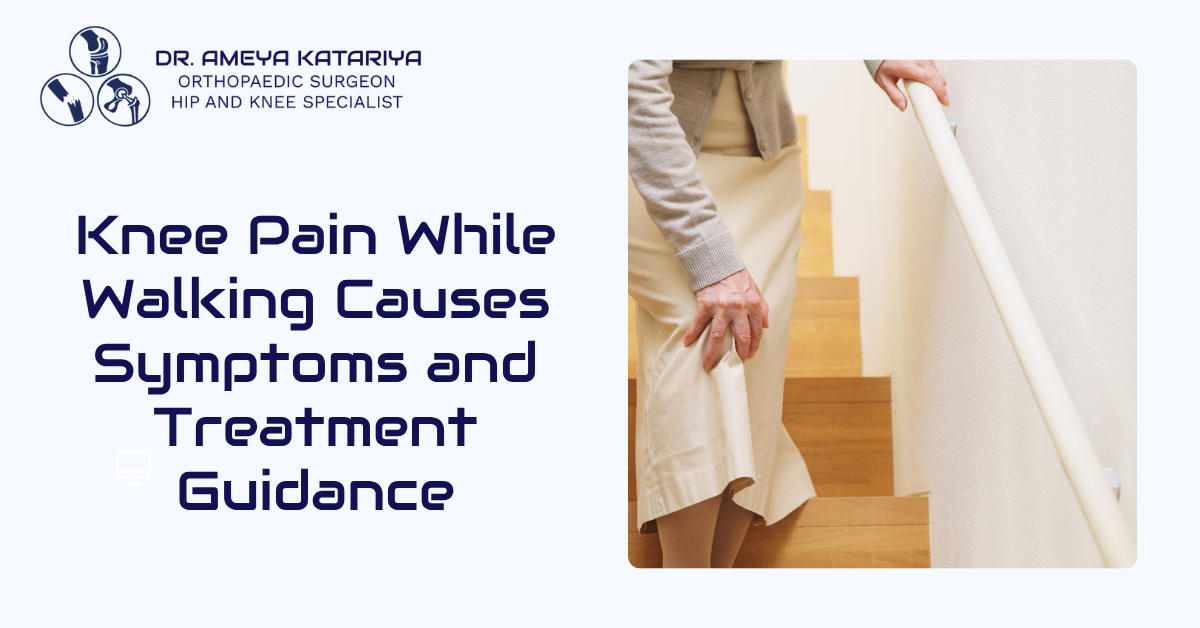
Walking is one of the simplest daily activities, but knee pain while walking can make routine movements challenging. Whether it occurs during short walks, climbing stairs, or longer distances, persistent knee pain may indicate an underlying joint problem.
While occasional discomfort may occur due to overuse or strain, ongoing pain can be related to conditions such as knee osteoarthritis, ligament injuries, meniscus tears, or cartilage damage.
Early evaluation can help identify the cause of pain and prevent further deterioration of the knee joint.
Dr Ameya Katariya, Fellowship-trained Hip and Knee Orthopaedic Surgeon in Pune, specialises in advanced knee care, sports injuries, and joint replacement procedures, helping patients receive personalised treatment based on their condition.
The knee is a complex joint that supports body weight and allows movement during activities like walking, running, and climbing stairs.
Knee pain while walking may occur due to:
• Wear and tear of the
joint
• Injury to ligaments or cartilage
• Inflammation
• Muscle
weakness
• Alignment problems
• Previous trauma
Identifying the exact cause is important for choosing the right treatment.
Knee osteoarthritis is one of the most common causes of knee pain, especially in adults.
It occurs when the protective cartilage inside the knee gradually wears down.
Symptoms May Include:
• Pain while walking
or standing
• Knee stiffness
• Swelling
• Reduced
movement
• Grinding sensation
Pain may initially occur after activity but can progress to discomfort during routine movements.
The meniscus acts as a cushion between the bones of the knee joint. A tear can occur due to sports injuries, twisting movements, or age-related changes.
Common Symptoms:
• Pain while
walking
• Knee clicking or locking
• Swelling
• Difficulty
bending the knee
• Feeling of instability
Treatment depends on the size and location of the tear.
Ligaments provide stability to the knee joint. Injuries to ligaments such as the ACL (Anterior Cruciate Ligament) can cause pain and instability.
Signs Include:
• Knee giving way while
walking
• Swelling after injury
• Difficulty with sudden
movements
• Reduced confidence during activities
Athletes and physically active individuals commonly experience ligament injuries.
This condition involves pain around or behind the kneecap.
It may occur due to:
• Muscle imbalance
•
Overuse
• Improper movement patterns
• Increased stress on the
kneecap
Pain is often noticed during:
• Walking downhill
•
Climbing stairs
• Sitting for long periods
Bursae are small fluid-filled sacs that reduce friction around the knee joint.
Inflammation of these structures can cause:
•
Swelling
• Tenderness
• Pain while walking or kneeling
Old injuries such as:
• Fractures
• Ligament
tears
• Cartilage damage
may contribute to knee pain years later due to
changes inside the joint.
Weak muscles around the knee can increase stress on the joint.
Problems with:
• Hip strength
• Thigh
muscles
• Walking pattern
may affect how pressure is distributed across
the knee.
The location and pattern of pain can provide clues about the possible cause.
May be related to:
• Patellofemoral pain syndrome
•
Kneecap problems
• Arthritis affecting the front compartment
May occur due to:
• Medial compartment arthritis
•
Meniscus injury
• Ligament problems
Possible causes include:
• Lateral meniscus
problems
• Iliotibial band irritation
• Joint inflammation
May be associated with:
• Muscle or tendon
problems
• Joint swelling
• Certain cysts or inflammation
Not every episode of knee pain requires medical treatment. However, you should consult a knee specialist if you experience:
Pain that continues for several weeks despite rest and basic care should be evaluated.
If knee pain affects your ability to walk comfortably or perform daily activities, professional assessment is recommended.
Frequent swelling may indicate inflammation or joint damage.
A feeling that the knee is:
• Giving way
•
Weak
• Unable to support your weight
requires evaluation.
Difficulty bending or straightening the knee may indicate internal joint problems.
Sudden pain after a sports injury, fall, or accident should be assessed to rule out ligament or cartilage damage.
A knee specialist may recommend:
The doctor evaluates:
• Knee movement
•
Stability
• Pain location
• Muscle strength
X-rays help identify:
• Arthritis changes
• Joint
space narrowing
• Bone-related problems
MRI provides detailed information about:
•
Ligaments
• Meniscus
• Cartilage
• Soft tissues
Treatment depends on the underlying cause and severity of symptoms.
Reducing activities that increase knee stress may help manage symptoms.
Low-impact activities such as:
• Walking on comfortable
surfaces
• Swimming
• Cycling
may be recommended.
Physiotherapy helps:
• Strengthen muscles around the
knee
• Improve flexibility
• Improve balance and stability
•
Reduce stress on the joint
Doctors may recommend medications to manage pain and inflammation when appropriate.
For selected patients, injections may help reduce symptoms and improve function.
Suitability depends on the condition and stage of joint damage.
For certain problems such as:
• Meniscus
tears
• Loose bodies
• Specific cartilage
injuries
knee
arthroscopy may be considered.
When advanced arthritis causes severe pain and affects quality of life, knee replacement surgery may be recommended.
Options include:
• Total Knee
Replacement: Used when multiple areas of the knee joint are
damaged.
• Partial
Knee Replacement: Suitable when damage is limited to one
compartment.
• Robotic Knee Replacement: Advanced robotic
technology helps surgeons with personalised planning and accurate implant
positioning.
✔ Maintain a healthy body weight
✔ Strengthen thigh muscles
regularly
✔ Wear supportive footwear
✔ Warm up before exercise
✔ Avoid sudden
increase in physical activity
✔ Treat knee injuries early
Dr Ameya Katariya is a fellowship-trained Hip and Knee Orthopaedic Surgeon in Pune with 3 years of specialised training in Robotic Hip and Knee Replacement from India and Australia.
He has received the National Gold Medal for excellence during orthopaedic training and has contributed significantly to international orthopaedic research.
With expertise in knee arthritis, sports injuries, and advanced joint replacement procedures, Dr Ameya Katariya provides personalised treatment plans focused on reducing pain, improving mobility, and helping patients return to an active lifestyle.
Knee pain while walking may occur due to arthritis, ligament injuries, meniscus tears, muscle weakness, previous injuries, or inflammation around the joint.
No. Knee pain can have several causes, including injuries, overuse, and soft tissue problems. A proper evaluation helps identify the exact cause.
Yes. Many patients improve with physiotherapy, lifestyle changes, medications, and other non-surgical treatments depending on the cause.
Knee replacement may be considered when severe joint damage causes persistent pain, limits daily activities, and does not improve with non-surgical treatments.
A fellowship-trained hip and knee orthopaedic surgeon can evaluate knee pain and recommend appropriate treatment options.
Robotic Joint Replacement
Ethical, Compassionate and comprehensive Orthopaedic care