

Robotic Joint Replacement
Ethical, Compassionate and comprehensive Orthopaedic care
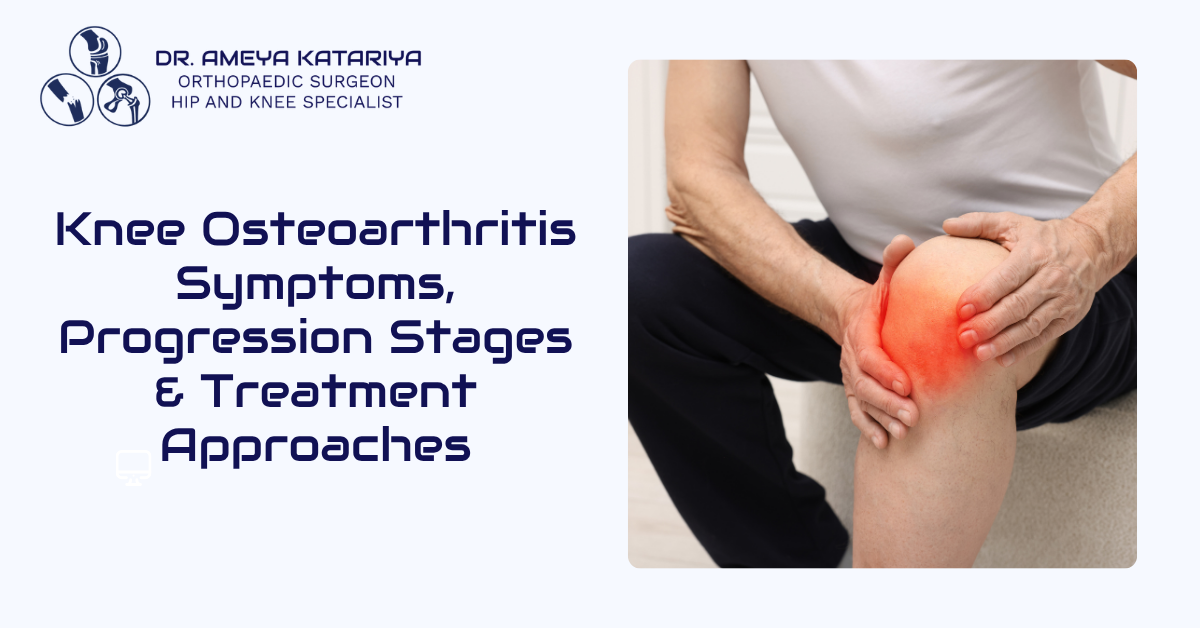
Knee pain is one of the most common joint problems affecting people of different age groups. While occasional discomfort may occur due to strain or injury, persistent knee pain and stiffness can be a sign of knee osteoarthritis.
Knee osteoarthritis is a progressive condition where the protective cartilage inside the knee joint gradually wears down. As the condition advances, it can affect walking, mobility, and everyday activities.
Early diagnosis and appropriate treatment can help manage symptoms, slow progression, and improve quality of life.
Dr Ameya Katariya, Fellowship-trained Hip and Knee Orthopaedic Surgeon in Pune, specialises in advanced knee care, including joint preservation treatments and knee replacement procedures, helping patients choose the right treatment based on their condition.
Knee osteoarthritis (OA) is a degenerative joint condition caused by gradual breakdown of cartilage that covers the ends of the bones inside the knee joint.
Healthy cartilage allows smooth movement by reducing friction between
bones. When cartilage wears away:
• Bones may rub against each other
•
Inflammation can develop
• Knee movement becomes painful
• Joint flexibility
decreases
Over time, osteoarthritis can affect knee alignment and overall joint function.
Several factors can increase the risk of developing knee osteoarthritis, including:
The risk of osteoarthritis increases as the cartilage naturally becomes less resilient with age.
Past injuries such as:
• ACL tears
• Meniscus
injuries
• Fractures around the knee
may increase
the risk of developing arthritis later.
Extra body weight increases stress on the knee joint and may accelerate cartilage damage.
Jobs or activities involving repeated:
•
Squatting
• Kneeling
• Heavy lifting
may contribute to knee wear
over time.
Some individuals may have a higher tendency to develop osteoarthritis due to inherited factors.
Symptoms usually develop gradually and may worsen over time.
Pain may occur during:
• Walking
• Climbing
stairs
• Standing for long periods
• Physical activities
In
advanced stages, pain may occur even at rest.
Many patients experience stiffness, especially:
• After
waking up
• After sitting for a long time
• After periods of
inactivity
Inflammation inside the joint may cause swelling and discomfort.
Knee arthritis may make it difficult to:
• Fully bend the
knee
• Straighten the leg
• Perform daily movements comfortably
Some patients notice:
• Clicking sounds
• Grinding
sensation
• Feeling of friction during movement
Advanced arthritis may cause the knee to feel weak or unstable while walking.
Knee osteoarthritis is commonly classified into four stages based on the extent of joint damage.
At this stage, there may be minor changes inside the knee joint.
Common Features:
• Minimal cartilage
damage
• Occasional discomfort
• Mild stiffness
• Usually no
major limitation in activities
Treatment Focus:
• Exercise and
strengthening
• Maintaining healthy weight
• Joint-friendly
lifestyle changes
Cartilage damage becomes more noticeable.
Symptoms May Include:
• Knee pain after
activity
• Mild swelling
• Stiffness after sitting
•
Occasional discomfort during movement
Treatment Options:
•
Physiotherapy
• Muscle strengthening exercises
• Activity
modification
• Pain management strategies
At this stage, cartilage loss increases and symptoms become more noticeable.
Common Symptoms:
• Frequent knee
pain
• Reduced flexibility
• Difficulty climbing stairs
•
Increased stiffness
• Reduced physical activity
Treatment Options:
• Structured
physiotherapy
• Medications if required
• Injections in selected
cases
• Evaluation for surgical options
This is the advanced stage where significant joint damage occurs.
Symptoms Include:
• Severe knee
pain
• Bone-on-bone contact
• Major movement limitation
•
Knee deformity
• Difficulty performing daily activities
Treatment Options:
For suitable patients, knee replacement
surgery may be recommended to restore mobility and relieve
pain.
Treatment depends on:
• Stage of arthritis
• Severity of
symptoms
• Age and activity level
• Overall health
• Patient goals
Making healthy lifestyle changes can help reduce stress on the knee joint.
These include:
• Maintaining healthy body weight
•
Choosing low-impact exercises
• Avoiding activities that worsen
pain
• Strengthening supporting muscles
Physiotherapy plays an important role in managing knee osteoarthritis.
Benefits include:
• Improved muscle strength
•
Better knee stability
• Increased flexibility
• Reduced stiffness
Exercises are usually customised according to the patient's condition.
Doctors may recommend medications to manage:
•
Pain
• Inflammation
• Symptoms affecting daily activities
Medication should always be taken under medical guidance.
Depending on the condition, some patients may benefit from injections to manage symptoms.
The suitability of injections depends on factors such as arthritis severity and overall knee health.
When arthritis becomes advanced and significantly affects quality of life, knee replacement surgery may be considered.
Types include:
• Total Knee
Replacement: The damaged surfaces of the entire knee joint are
replaced.
• Partial Knee
Replacement: Only the damaged compartment of the knee is
replaced in suitable patients.
• Robotic Knee Replacement:
Robotic-assisted technology helps surgeons with advanced planning, implant
positioning, and personalised surgical approach.
Consult an orthopaedic knee specialist if you experience:
•
Persistent knee pain
• Difficulty walking
• Pain affecting
sleep
• Frequent swelling
• Reduced knee movement
•
Difficulty performing daily activities
Early evaluation can help identify the right treatment before symptoms become severe.
While osteoarthritis cannot always be prevented, certain habits may help protect knee health:
✔ Maintain a healthy weight
✔ Exercise regularly with proper
technique
✔ Strengthen thigh muscles
✔ Avoid excessive stress on joints
✔ Treat
knee injuries promptly
Dr Ameya Katariya is a fellowship-trained Hip and Knee Orthopaedic Surgeon in Pune with 3 years of specialised training in Robotic Hip and Knee Replacement from India and Australia.
He has been awarded the National Gold Medal for excellence during orthopaedic training and has contributed significantly to international orthopaedic research.
With expertise in advanced knee treatments, including joint preservation and knee replacement procedures, Dr Ameya Katariya provides personalised treatment plans focused on reducing pain, improving mobility, and helping patients return to an active lifestyle.
Knee osteoarthritis commonly occurs due to cartilage wear over time. Age, previous injuries, weight, genetics, and repetitive stress can increase the risk.
Osteoarthritis is a progressive condition, but symptoms can often be managed effectively through lifestyle changes, physiotherapy, medications, and appropriate treatments.
The best treatment depends on the stage of arthritis. Early stages may improve with physiotherapy and lifestyle changes, while advanced arthritis may require knee replacement surgery.
No. Many patients manage symptoms without surgery. Knee replacement is considered when severe arthritis causes persistent pain and affects daily life.
Knee replacement may be considered when pain becomes severe, daily activities are affected, and non-surgical treatments no longer provide relief.
Robotic Joint Replacement
Ethical, Compassionate and comprehensive Orthopaedic care