
Robotic Joint Replacement
Ethical, Compassionate and comprehensive Orthopaedic care
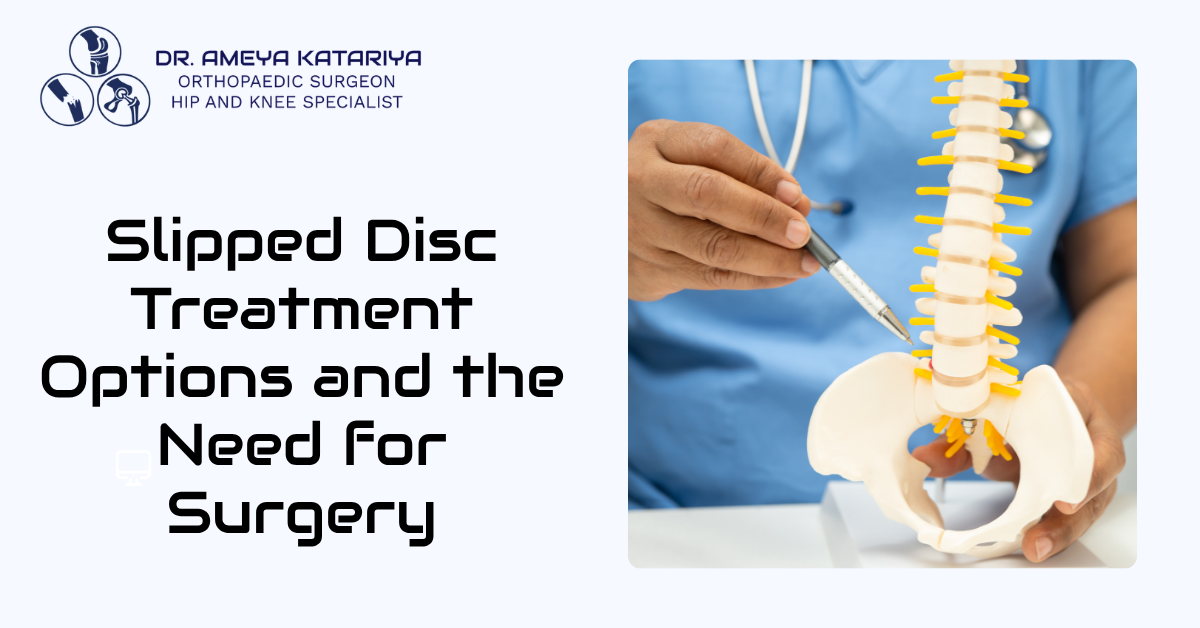
Back pain is one of the most common musculoskeletal problems affecting people of all ages. While many cases improve with rest, exercise, and physiotherapy, some conditions require specialised treatment.
A slipped disc, also known as a herniated disc or disc prolapse, occurs when the soft inner material of a spinal disc pushes through its outer layer and irritates nearby nerves.
Depending on the severity of symptoms, treatment may range from medications and physiotherapy to advanced spine surgery.
Understanding when surgery is needed for a slipped disc can help patients make informed decisions and seek timely care.
The spine is made up of small bones called vertebrae, which are separated by soft cushion-like structures called intervertebral discs.
These discs help:
• Absorb shock during movement
• Maintain
flexibility of the spine
• Allow smooth bending and twisting
A slipped disc occurs when the inner gel-like portion of the disc leaks through a tear in the outer layer, causing irritation or pressure on nearby spinal nerves.
A slipped disc can develop due to several factors, including:
As we age, spinal discs lose water content and flexibility, making them more prone to injury.
Lifting heavy objects with incorrect posture can put excessive stress on spinal discs.
Falls, accidents, or sudden twisting movements can contribute to disc problems.
Long hours of sitting, incorrect working posture, and lack of movement may increase stress on the spine.
Weak supporting muscles can reduce spinal stability and increase pressure on discs.
Symptoms depend on the location and severity of disc herniation.
Pain may occur in the lower back and may worsen with:
•
Sitting for long periods
• Bending forward
• Lifting objects
A slipped disc in the lower spine can irritate nerves and cause
pain that travels from the back into:
• Buttocks
• Thigh
•
Calf
• Foot
Nerve compression may cause:
• Pins-and-needles
sensation
• Numbness
• Reduced sensation in the leg
Severe nerve compression may result in weakness
affecting:
• Walking
• Standing
• Foot or leg movement
Rarely, severe nerve compression can affect bladder or bowel function. This requires immediate medical attention.
A spine specialist may use:
The doctor evaluates:
• Muscle strength
•
Reflexes
• Sensation
• Movement limitations
MRI is commonly used to assess:
• Disc herniation
•
Nerve compression
• Severity of disc damage
X-rays may help evaluate:
• Bone alignment
• Other
structural problems
Treatment depends on:
• Severity of symptoms
• Duration of
pain
• Nerve involvement
• Patient’s lifestyle and activity needs
Most patients improve without surgery.
Physiotherapy
A customised physiotherapy
program may help:
• Strengthen core muscles
• Improve
posture
• Reduce pressure on the spine
• Restore movement
Medications
Doctors may recommend
medications to manage:
• Pain
• Inflammation
• Muscle spasms
Activity Modification
Patients may be
advised to:
• Avoid heavy lifting
• Maintain proper
posture
• Modify activities causing pain
Lifestyle Changes
Helpful measures
include:
• Maintaining healthy body weight
• Regular low-impact
exercises
• Improving sitting and sleeping posture
In selected cases, doctors may recommend procedures such as epidural steroid injections to reduce inflammation around irritated nerves.
These may provide temporary relief and support rehabilitation in suitable patients.
Surgery is not required for every slipped disc. It is usually considered when:
If severe pain continues despite:
• Physiotherapy
•
Medications
• Lifestyle modifications
surgery may be considered.
Increasing weakness in the leg or foot may indicate significant nerve compression requiring surgical evaluation.
When the disc strongly compresses a nerve and causes ongoing symptoms, surgery may help relieve pressure.
If pain significantly affects:
• Walking
•
Working
• Sleeping
• Routine activities
surgical treatment may be
considered.
Immediate medical attention is required if there is:
• Loss
of bladder or bowel control
• Numbness around the inner thighs or genital
area
• Sudden severe weakness
The recommended procedure depends on the location and severity of the disc problem.
Microdiscectomy is a minimally invasive procedure where the surgeon removes the portion of the disc pressing on the nerve.
Benefits may include:
• Nerve decompression
•
Relief from leg pain
• Smaller incision
• Faster recovery compared
to traditional surgery
Endoscopic techniques use a small camera and specialised instruments to treat selected disc problems through smaller incisions.
In specific cases involving instability or significant degeneration, procedures such as disc replacement or spinal fusion may be considered.
Recovery depends on:
• Type of surgery performed
• Severity
of nerve compression
• Overall health
• Rehabilitation progress
Patients may gradually begin:
• Walking
• Gentle
movements
• Basic rehabilitation exercises
Focus is on:
• Improving mobility
• Avoiding
strain
• Gradually returning to routine activities
Patients continue:
• Strengthening exercises
•
Posture correction
• Spine-friendly lifestyle habits
Following rehabilitation guidelines helps prevent recurrence.
Yes, many slipped disc cases improve with non-surgical treatment.
However, surgery may become necessary when symptoms are severe, persistent, or associated with nerve damage.
A spine specialist can determine the most appropriate approach after evaluation.
✔ Maintain good posture while sitting and working
✔ Use proper
techniques while lifting objects
✔ Strengthen core and back muscles
✔ Maintain a
healthy weight
✔ Avoid prolonged sitting
✔ Stay physically active
Dr Ameya Katariya is a fellowship-trained Hip and Knee Orthopaedic Surgeon in Pune with 3 years of specialised training in Robotic Hip and Knee Replacement from India and Australia.
He has been awarded the National Gold Medal for excellence during orthopaedic training and has contributed significantly to international orthopaedic research.
With expertise in advanced orthopaedic care and personalised treatment planning, Dr Ameya Katariya focuses on accurate diagnosis, evidence-based treatment, and helping patients return to an active lifestyle.
Treatment depends on the severity of symptoms. Many patients improve with physiotherapy, medications, and lifestyle changes, while some may require surgery.
Surgery may be needed if pain persists despite treatment, there is worsening weakness, severe nerve compression, or symptoms affecting daily activities.
Recovery varies depending on the severity of the condition. Many patients improve within weeks to months with proper treatment and rehabilitation.
When performed for appropriate cases, slipped disc surgery can effectively relieve nerve compression and improve symptoms.
Recurrence is possible, but maintaining good posture, strengthening muscles, and following spine care advice can help reduce risk.
Robotic Joint Replacement
Ethical, Compassionate and comprehensive Orthopaedic care