
Robotic Joint Replacement
Ethical, Compassionate and comprehensive Orthopaedic care
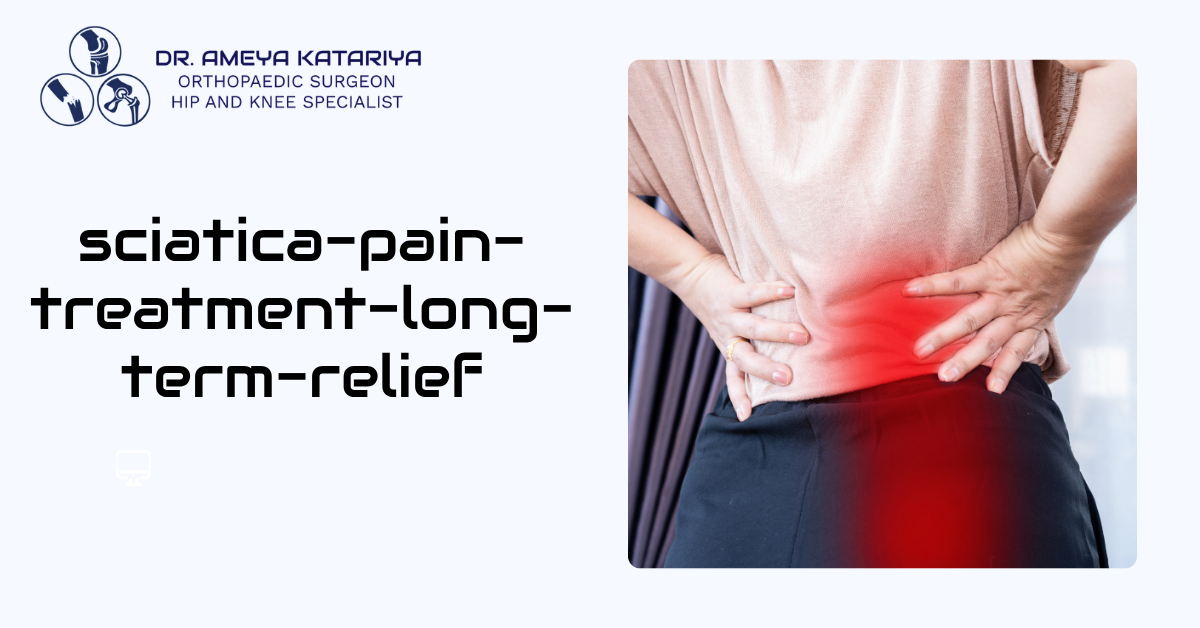
Sciatica is a common condition that causes pain along the path of the sciatic nerve, which runs from the lower back through the hips and down each leg. It can cause sharp pain, numbness, tingling, and weakness that may affect walking, working, and daily activities.
While mild cases of sciatica often improve with rest, exercises, and conservative treatments, persistent symptoms may require advanced evaluation and specialised treatment.
With modern advancements in spine care, treatment approaches now focus not only on reducing pain but also on addressing the underlying cause to achieve long-term relief.
Dr Ameya Katariya, Fellowship-trained Hip and Knee Orthopaedic Surgeon in Pune, provides advanced orthopaedic care with personalised treatment plans focused on improving mobility and quality of life.
Sciatica refers to pain caused by irritation or compression of the sciatic nerve, the largest nerve in the human body.
The sciatic nerve originates from the lower spine and travels
through:
•
Lower back
• Buttocks
• Back of the thigh
• Calf
• Foot
When this nerve becomes compressed or irritated, it can cause pain that radiates from the lower back into the leg.
Sciatica is not a disease itself but a symptom of an underlying problem affecting the nerves.
Common causes include:
A slipped disc occurs when the soft inner portion of a spinal disc pushes outward and presses on nearby nerves.
It is one of the most common causes of sciatica.
Symptoms May Include:
• Lower back
pain
• Shooting leg pain
• Tingling or numbness
• Weakness
in the leg
Spinal stenosis occurs when the space inside the spine becomes narrow, putting pressure on spinal nerves.
It May Cause:
• Leg pain while
walking
• Numbness
• Weakness
• Relief when sitting or
bending forward
As spinal discs age, they may lose height and flexibility, leading to irritation of nearby nerves.
This condition occurs when one vertebra slips forward over another, potentially compressing nerves and causing sciatica symptoms.
In some cases, tightness or irritation of the piriformis muscle can affect the sciatic nerve and cause similar symptoms.
Sciatica symptoms can vary depending on the severity of nerve irritation.
The most common symptom is pain that travels from the lower back into the buttock and leg.
Pain may feel like:
• Sharp
• Burning
•
Electric shock-like
Nerve compression may cause:
• Pins-and-needles
sensation
• Reduced feeling in the leg or foot
Some patients may experience difficulty with:
•
Walking
• Lifting the foot
• Standing for long periods
Sciatica may occur with or without significant back pain.
A spine specialist may evaluate sciatica through:
The doctor assesses:
• Muscle strength
•
Reflexes
• Sensation
• Range of movement
MRI provides detailed information about:
• Disc
problems
• Nerve compression
• Spinal abnormalities
X-rays may help identify:
• Spine alignment
issues
• Bone-related changes
Sciatica treatment focuses on relieving nerve irritation, improving function, and preventing recurrence.
The right treatment depends on:
• Cause of sciatica
•
Severity of symptoms
• Duration of pain
• Presence of nerve weakness
Physiotherapy remains one of the most important approaches for long-term sciatica management.
A customised program may include:
Core Strengthening
Helps improve spinal
support and reduce stress on the lower back.
Stretching Exercises
May improve
flexibility and reduce nerve irritation.
Posture Training
Helps correct movements
that may contribute to symptoms.
Benefits Include:
• Improved
mobility
• Reduced pain
• Better spine function
Doctors may prescribe medications to manage:
•
Nerve-related
pain
• Inflammation
• Muscle spasms
Medication selection depends on the individual's condition and should be taken under medical guidance.
Long-term relief often requires changes in daily habits.
Helpful measures include:
✔ Maintaining healthy body weight
✔
Avoiding prolonged sitting
✔ Improving workplace posture
✔ Using proper
lifting techniques
✔ Staying physically active
In selected cases, doctors may recommend procedures such as:
Epidural Steroid Injections
These
injections deliver medication near the irritated nerve to help reduce inflammation
and pain.
They may provide relief and support participation in rehabilitation.
For patients who do not improve with conservative treatment, minimally invasive procedures may be considered.
Options may include:
Microdiscectomy
A small portion of the
disc
pressing on the nerve is removed to relieve compression.
Benefits may
include:
• Nerve decompression
• Relief from leg pain
•
Smaller incision
• Faster recovery compared to traditional surgery
Endoscopic Spine Surgery
Advanced
endoscopic techniques use specialised instruments and a small camera to treat
selected spine conditions through smaller incisions.
Most patients do not require surgery. However, surgical treatment may be considered when:
If severe symptoms continue despite:
•
Physiotherapy
•
Medications
• Lifestyle changes
surgery may be evaluated.
Increasing weakness in the leg or foot may require urgent assessment.
When imaging shows significant nerve compression causing ongoing symptoms, surgery may help relieve pressure.
This is a medical emergency requiring immediate evaluation.
Depending on the cause, a physiotherapist may recommend:
• Gentle
hamstring stretches
• Core strengthening exercises
• Pelvic tilts
•
Walking exercises
• Spine mobility exercises
Exercises should be performed under expert guidance, especially when nerve symptoms are present.
Long-term prevention focuses on maintaining spine health:
✔ Strengthen core muscles
✔ Maintain correct posture
✔ Avoid lifting
heavy objects incorrectly
✔ Take breaks from prolonged sitting
✔ Maintain a healthy
weight
✔ Continue recommended exercises
Dr Ameya Katariya is a fellowship-trained Hip and Knee Orthopaedic Surgeon in Pune with 3 years of specialised training in Robotic Hip and Knee Replacement from India and Australia.
He has been awarded the National Gold Medal for excellence during orthopaedic training and has contributed significantly to international orthopaedic research.
With a patient-focused approach and expertise in advanced orthopaedic treatments, Dr Ameya Katariya provides personalised care plans designed to reduce pain, improve mobility, and support long-term recovery.
Pain relief depends on the underlying cause. Rest, guided exercises, physiotherapy, and appropriate medical treatment can help manage symptoms.
Yes, many cases improve with conservative treatments such as physiotherapy, medications, and lifestyle modifications.
Recovery varies depending on the cause and severity. Some cases improve within weeks, while chronic conditions may require longer treatment.
Surgery may be considered when pain persists despite treatment, there is progressive weakness, or significant nerve compression is present.
A spine specialist or orthopaedic specialist can evaluate the cause of sciatica and recommend appropriate treatment options.
Robotic Joint Replacement
Ethical, Compassionate and comprehensive Orthopaedic care